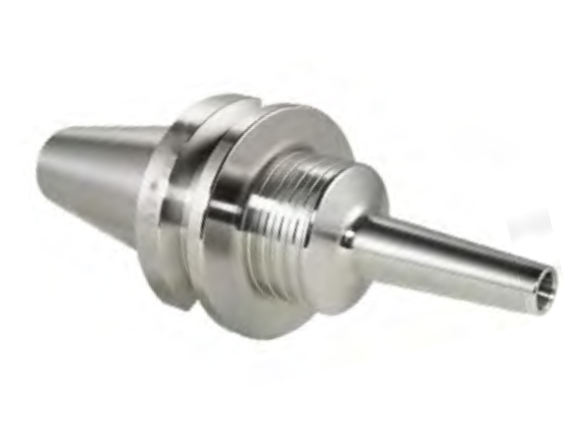
BT30 vs BT40 vs BT50: Which Tool Holder Fits Your Machining Centre
Short answer: match the holder to the spindle taper your machine already has — BT30 for small, high-speed machines; BT40 for the broad middle of VMC and HMC work; BT50 where heavy cuts and large-diameter tooling dominate. There is no "best" taper, only the one your spindle accepts and the one your cut requires.
This guide explains what actually changes between the three sizes, so you can specify correctly instead of guessing from a catalogue photo.
What BT actually is
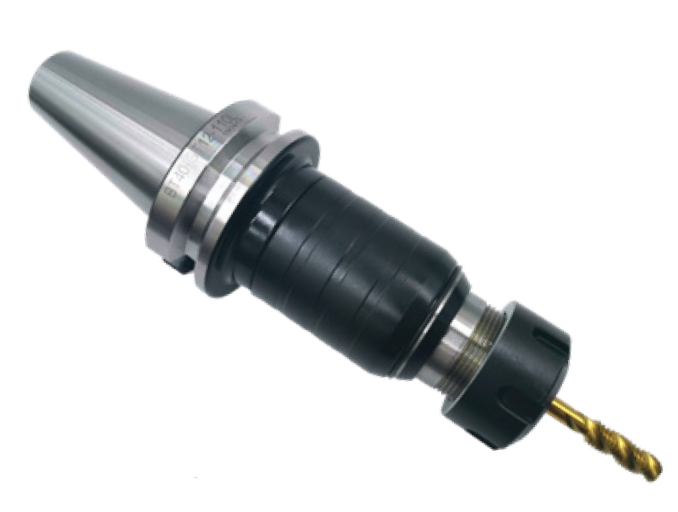
BT is a steep-taper interface defined in JIS B 6339. The taper itself is 7:24, the same ratio used by SK (DIN 69871) and CAT (ANSI B5.50). The three systems differ in flange geometry, coolant arrangement and pull-stud thread — not in the taper angle.
That single fact resolves most confusion: a BT40 holder and a CAT40 holder share the same spindle taper, but they are not interchangeable in the same machine, because the flange, the drive keys and the retention knob differ.
Practical consequence: when you buy a machine, the taper standard decides your whole tooling inventory. When you buy tooling, order against the machine's declared standard, not against a photo.
The three sizes, side by side
| BT30 | BT40 | BT50 | |
|---|---|---|---|
| Typical machine | Drill-tap centres, small VMCs, high-speed spindles | General VMC / HMC work | Heavy HMC, large-part machining |
| Relative size | Smallest flange and taper | Mid | Largest |
| Torque capacity | Lowest | Medium | Highest |
| Max practical tool diameter | Small | Medium | Large |
| Spindle speed tendency | Higher | Medium | Lower |
| Tooling cost | Lowest | Medium | Highest |
| Best fit for | Small parts, fast cycles | Mixed production | Heavy stock removal |
The table is directional, not absolute: a modern BT40 spindle with a rigid machine can out-cut an old BT50. Size sets the ceiling, not the result.
How to decide in practice
1. Start from the spindle. The machine's manual states BT30, BT40 or BT50 (sometimes with a dual-contact variant such as BBT). Everything downstream follows.
2. Then look at the largest cut you actually run. If your heaviest operation is a 50 mm face mill at moderate depth, BT40 is normally enough. If you routinely swing 100 mm plus cutters in steel, BT50 exists for that reason.
3. Then look at part size and cycle time. Small parts and short cycles reward the lower inertia of BT30. Large fixtures and long reaches punish it.
4. Check the small parts of the interface. Pull studs, retention knobs and coolant tubes are size-specific. A holder without the correct pull stud is unusable — this is the most common ordering mistake we see.
Where people go wrong
- Buying BT tooling for a CAT spindle because the taper "looks the same". It is the same angle with a different flange; it will not seat correctly.
- Assuming bigger is always more rigid. A BT50 holder on a light machine adds mass and can reduce achievable spindle speed.
- Ignoring dual-contact variants. BBT (dual-contact) holders add face contact and change rigidity at high speed; they are not a straight swap for standard BT in every spindle.
- Forgetting the pull stud. It is a separate line item with its own thread and gauge length.
What we stock
Our BT range covers shrink-fit chucks in slim Form C, hydraulic chucks in BT30/BT40/BBT40, and pull studs for BT30/BT40/BT50 holders, plus HSK-T tooling for turn-mill work.
- Shrink-fit: BT40 Shrink Chuck 3° Slim Form C
- Collet chuck example: ER32-52 Collet Chuck
- Full catalogue: shop
The one-line rule
Buy the taper your spindle declares. Choose the size by the heaviest cut you actually run, not by the heaviest cut you imagine.
If you tell us the machine model and the largest cutter you use, we will confirm the holder series and the pull stud in one reply — MOQ 1 piece, in-stock items ship in 3-7 days, made-to-order 15-60 days.