Hydraulic Chuck Maintenance: Clamping Force, Seals and Runout Checks
Short answer: a hydraulic chuck stays accurate only while three things are in condition — the hydraulic sleeve, the pressure-screw thread and the seals. Check runout at the gauge line, confirm the shank is still held at the pressure you expect, and replace seals on a schedule rather than after a leak. A practical interval for most shops is every 500–1,000 clamping cycles, or every three months on single-shift work, whichever comes first.
How the chuck actually clamps
There is no collet inside a hydraulic chuck. The tool shank enters a bore surrounded by a sealed hydraulic sleeve. Turning the pressure screw drives a piston that pressurises the fluid, and the sleeve closes evenly around the full circumference of the shank. Because the pressure is distributed around the bore instead of concentrated at a few slits, radial error stays small and the fluid film damps vibration.
That design also explains its weakness. Clamping force comes from a closed, pre-filled hydraulic system. Anything that lets fluid escape, or lets air and coolant in, changes the clamping force without leaving a mark on the outside of the holder.
What wears first
- Sleeve fatigue. The sleeve flexes on every clamp cycle. After a few hundred thousand cycles the bore takes a permanent set, and clamping force falls away even though the screw still reaches its stop.
- Seal hardening. Elastomer seals harden with heat and cutting oil. A hard seal weeps slowly, the fluid level behind the piston drops, and the chuck begins to feel soft at the end of the stroke.
- Thread wear and galling. Almost always caused by tightening with an extension bar. Take the screw to its marked torque and no further.
- Bore contamination. Fine chips and dried coolant lap both bore and shank. A scored bore will not hold concentricity regardless of torque.
- Heat soak. A holder left in a hot spindle with no tool in it cooks the seals. Store holders in a rack, not in the spindle.
Three checks you can run at the machine
- Runout at the gauge line. Load a test bar and indicate 20–30 mm from the nut. A precision hydraulic chuck is normally specified at 0.005 mm or better. At 0.01 mm, book a service; at 0.02 mm, stop using the holder for finishing work.
- Clamping force. With the chuck clamped, try to twist and pull the tool by hand. Movement means the sleeve is not closing on the shank. For a number, use a pull-out test rig, or compare the torque needed to turn the pressure screw with the value you recorded when the chuck was new.
- Bore and shank condition. Wipe the bore with a lint-free cloth and look for bright scoring rings. Inspect the shank for fretting. A shank that has spun in a chuck should be replaced — it will not seat true again.
Seal service, done properly
Seal kits cost little and prevent most failures. Work on a clean bench, note the screw position before dismantling, replace every seal in the kit rather than only the one that leaked, refill with the fluid the maker specifies, bleed the piston by cycling it a few times before the final fill, and torque the screw to spec. Then repeat the runout check: a pinched seal shows up immediately as runout or a soft stroke.
Fault table
| Symptom | Most likely cause | Action |
|---|---|---|
| Tool pulls out under load | Sleeve fatigue or lost fluid | Seal kit first, then assess the sleeve |
| Runout grows over weeks | Scored bore or worn shank | Clean the bore; replace the shank |
| Screw turns but feels spongy | Air in the system | Bleed and refill |
| Oil film on the holder body | Weeping seal | Full seal kit, not a single seal |
| Chatter at high speed only | Reduced clamping force | Force check, then service |
| Ring pattern on the shank | Chips in the bore | Clean before every load |
Repair or replace
Seals, screws and shanks are service parts. A chuck whose bore is scored, whose sleeve has taken a set, or whose body has been overheated is a replacement. If a full service does not bring runout back inside 0.01 mm at the gauge line, the holder has reached the end of its life for finishing work. Keep it for roughing if the job allows, and reserve new holders for the operations where concentricity is paid for.
What we stock
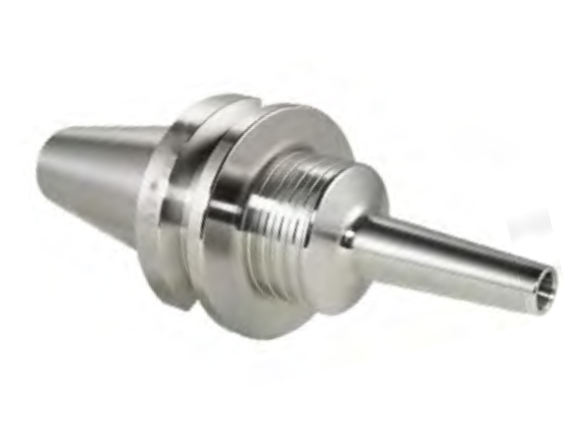
- BT40 Slender High Precision Hydraulic Chuck — BT40-HDC06/08/10/12/20-140S, 140 mm gauge length.
- High Precision Hydraulic Chuck BT30/BT40/BBT40 — 32 variants, BT30-HDC03-60L through BT30-HDC20-90L.
- HSK63A High Precision Hydraulic Chuck — HSK63A-HDC06-80L through HSK63A-HDC25-110L.
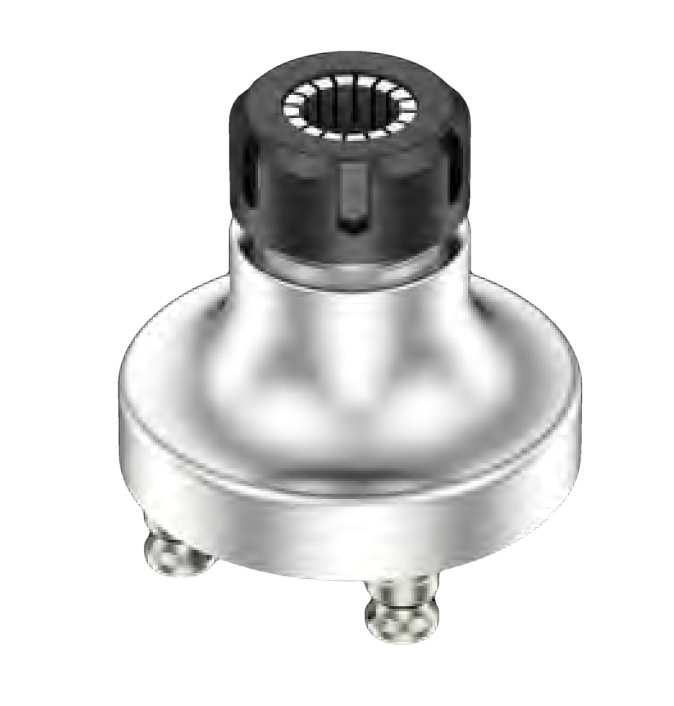
- High-precision Hydraulic Chuck Collet — HC12-3 through HC32-25.
Check runout, check clamping force, change seals on a schedule. A hydraulic chuck fails slowly, and the first sign is usually a finish problem, not a loose tool.
MOQ 1 piece, in-stock items ship in 3–7 days, made-to-order 15–60 days.