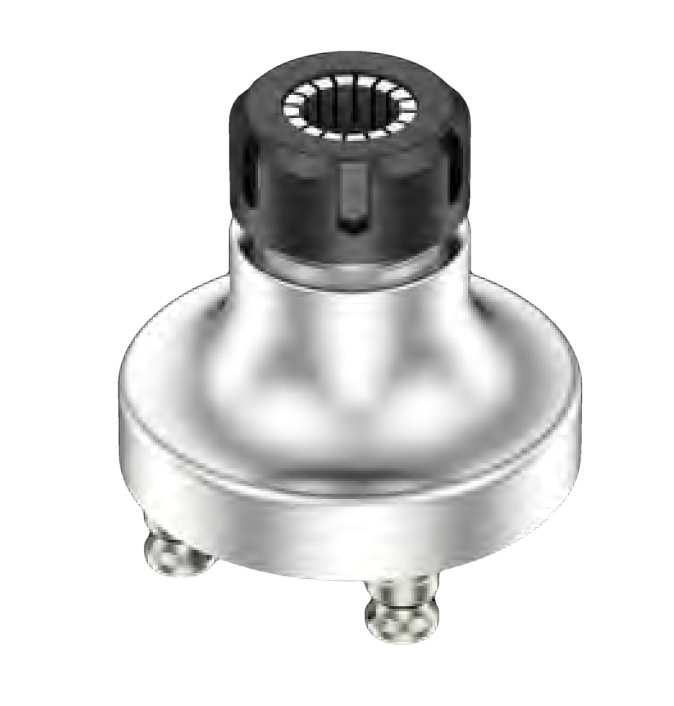
ER Collet Chuck vs Hydraulic Chuck: Runout, Rigidity and Cost
Short answer: an ER collet chuck is the economical general-purpose choice with a clamping range per collet and typical runout around 0.01–0.015 mm; a hydraulic chuck gives better damping and repeatability (around the 0.003 mm class) and is preferred for finishing and high-surface-quality work. Choose ER for variety and cost, hydraulic for precision and finish.
What each one actually does
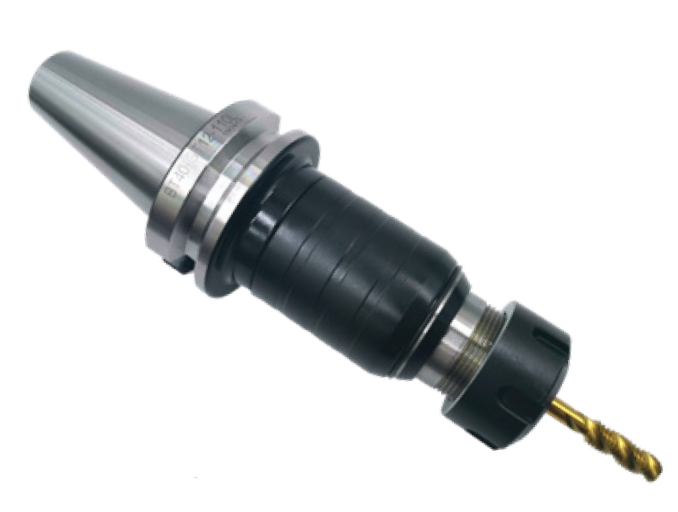
ER collet chuck. A nut compresses a slotted collet onto the tool shank. One chuck body accepts a family of collets (ER11 through ER40 in common use), each collet covering a small clamping range. Change the collet, change the tool diameter.
Hydraulic chuck. A sealed chamber of oil is pressurised by a screw, deflecting a thin sleeve onto the shank. Clamping is uniform around the circumference, with no slots and no nut.
The mechanisms explain every practical difference that follows.
Comparison
| ER collet chuck | Hydraulic chuck | |
|---|---|---|
| Clamping mechanism | Mechanical, slotted collet + nut | Hydraulic sleeve |
| Typical runout class | ~0.01–0.015 mm | ~0.003 mm class |
| Damping / vibration | Moderate | Better |
| Diameter flexibility | Wide — one body, many collets | Fixed bore per holder |
| Changeover speed | Fast, inexpensive | Fast, no collet to stock |
| Cost per tool diameter | Low | Higher per holder |
| Best for | Drilling, roughing, mixed tooling | Finishing, high surface quality, long tool life |
Where the difference is felt on the machine
Surface finish. The hydraulic sleeve clamps uniformly and damps vibration. On finishing passes in steel or on thin-walled parts, that shows up as a better surface and fewer chatter marks.
Tool life. Less runout means the cutting edges share load more evenly. In production, this is often the number that pays for the holder.
Flexibility. An ER chuck with a collet set covers many diameters with one purchase. Hydraulic chucks are diameter-specific — useful when the process is fixed, awkward when it is not.
Changeover discipline. ER requires keeping the right collet and nut torque on hand. Hydraulic requires the correct bore and clean shank; contamination in the sleeve is the usual failure mode.
How to choose
1. Mixed, small-batch work with many tool diameters → ER. The flexibility wins. 2. Fixed process, finish-critical, or long-run production → hydraulic. 3. Both in the same shop → ER for drilling and roughing, hydraulic for the finishing operations that decide the surface. 4. Very high spindle speeds → check the holder's balance specification for the speed you run; this matters more than the clamping type.
Sizing notes
ER collets are designated by body size (ER11, ER16, ER20, ER25, ER32, ER40, ER50) and each covers a range of shank diameters. Buy the chuck for the largest diameter you need in that family, then the collets for the individual tools.
Hydraulic chucks are ordered by bore diameter and body length. Two holders of the same bore but different length behave differently in deep cavities — length is a rigidity decision, not a convenience.
What we stock
- ER collet chucks: ER32-52 Collet Chuck
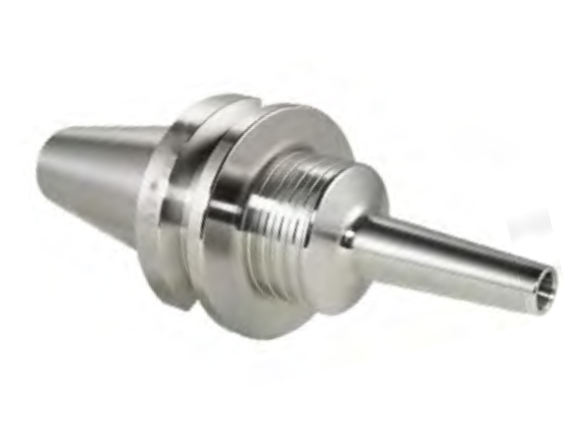
- Shrink-fit alternative for high-speed finishing: BT40 Shrink Chuck Slim Form C
- Full range: shop
The one-line rule
ER buys you coverage; hydraulic buys you precision. If the part's surface decides whether you win the order, pay for the hydraulic chuck on the finishing operation only.
MOQ 1 piece, in-stock items ship in 3-7 days, made-to-order 15-60 days.