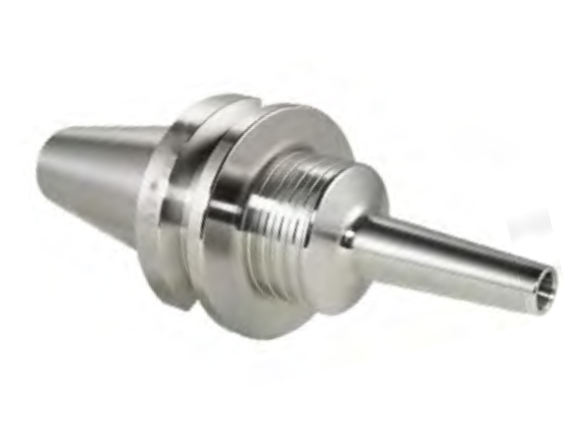
DIN 69871 vs DIN 69893: Tool Holder Tapers Explained
Short answer: DIN 69871 is a steep-taper interface (7:24) with a flange and drive slots, used for SK and closely related holders; DIN 69893 is a hollow-taper interface (1:10) with face contact, used for HSK. They are not two versions of the same thing — they are two different spindle systems, and the machine decides which one you are in.
Why the standard number matters
The standard tells you the geometry, and the geometry tells you what the holder will do at speed. Two holders that look similar in a photo can belong to different standards and be mutually unusable.
DIN 69871 — steep taper
The 7:24 steep taper seats on the taper surface only. The flange carries drive slots that engage keys in the spindle, and the retention knob (pull stud) pulls the holder into the spindle from behind.
Characteristics:
- Taper ratio: 7:24
- Seating: taper contact
- Drive: flange slots and spindle keys
- Related systems: SK (DIN 69871), BT (JIS B 6339), CAT (ANSI B5.50) — same taper angle, different flange/thread/coolant details
- Typical use: general machining centres, wide range of spindle speeds
Because seating is on the taper alone, angular repeatability at the spindle nose is a function of taper contact quality and cleanliness. That is why steep-taper holders must be kept free of chips and why the taper is the first thing to inspect after a crash.
DIN 69893 — hollow taper (HSK)
The 1:10 hollow taper seats on both taper and face. Clamping is from inside the hollow shank, which pulls the holder onto the spindle face.
Characteristics:
- Taper ratio: 1:10
- Seating: taper + face contact
- Drive: two drive keys engaging keyways on the shank (width depends on the variant)
- Forms: A through F, differing in coolant arrangement and drive orientation
- Typical use: higher spindle speeds, turn-mill machines, applications needing fast, repeatable changes
Face contact is the reason HSK repeats well at the spindle nose: axial position is set by the face, not only by taper interference.
Side-by-side
| DIN 69871 (steep taper) | DIN 69893 (HSK) | |
|---|---|---|
| Taper ratio | 7:24 | 1:10 |
| Seating | Taper only | Taper + face |
| Retention | Pull stud from behind | Internal clamping |
| Drive | Flange slots | Shank keyways |
| Repeatability at nose | Good, taper-dependent | High, face-referenced |
| High-speed behaviour | Adequate | Better |
| Common families | SK, BT, CAT | HSK-A/C/E/F, HSK-T |
How people get it wrong
Treating BT, SK and CAT as interchangeable. The taper is 7:24 in all three, but flange thickness, gauge line, coolant holes and pull-stud thread differ. They do not mix.
Assuming HSK is "just a smaller taper". The 1:10 ratio and face contact change clamping, repeatability and the tooling ecosystem.
Ignoring the form letter. HSK-A, HSK-C, HSK-E and HSK-F differ in coolant and drive details; the letter is part of the specification.
Buying holders before reading the machine plate. The spindle designation (e.g. HSK-A63, BT40, SK40) is the single source of truth.
What we stock
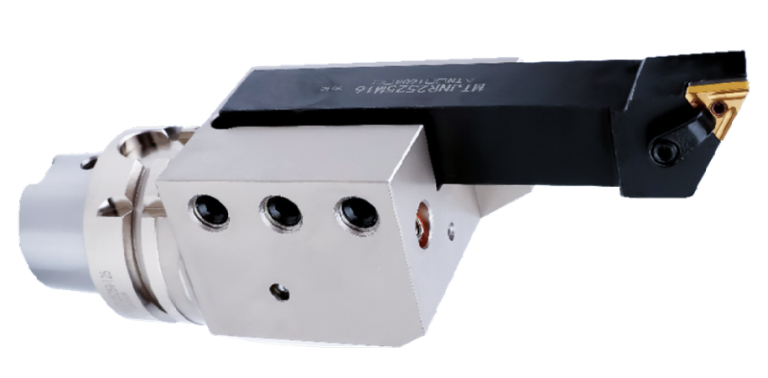
- HSK-T turning and boring holders: HSK-T Turning Tools For Facing
- Shrink-fit holders across BT / SK / CAT / HSK-A / HSK-E / HSK-F
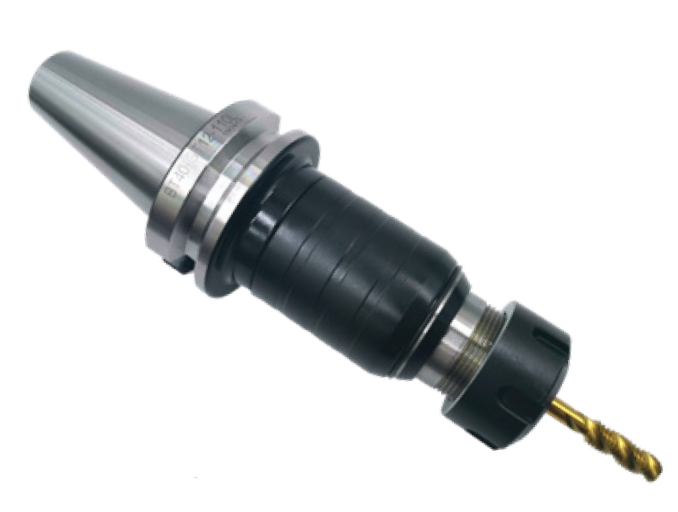
- BT shrink chuck example: BT40 Shrink Chuck Slim Form C
- Full range: shop
The one-line rule
7:24 seats on the taper; 1:10 seats on taper and face. Read the machine plate, then buy the family — never the photo.
MOQ 1 piece, in-stock items ship in 3-7 days, made-to-order 15-60 days.