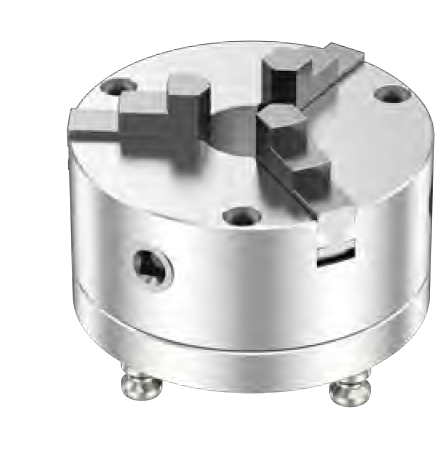
Zero-Point Clamping on a VMC: When It Pays For Itself
Short answer: zero-point clamping pays when setup time, not cutting time, is your bottleneck — typically on machines that run many short jobs, or where the same fixture recurs across machines. It buys repeatable position without indicating, at the cost of a pallet system and disciplined fixture design.
What zero-point clamping actually does
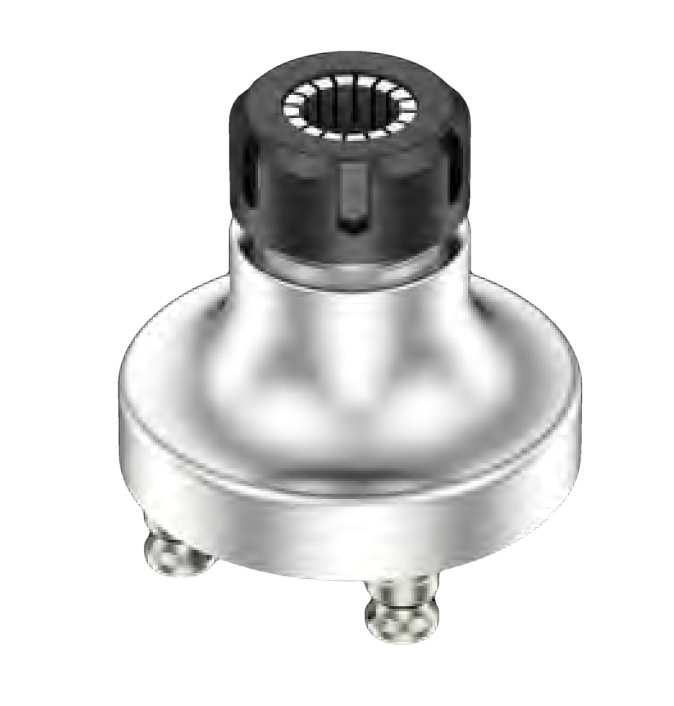
A zero-point chuck is a clamping unit with a repeatable reference: a pull stud on the fixture (or pallet) is drawn in and locked, and the fixture lands in the same position every time. Position is defined by the chuck, not by indicating the fixture against the table.
Two consequences matter:
- Changeover stops being a measurement task. Swap the pallet, press clamp, cut.
- Fixtures become portable. The same pallet can move between machines equipped with the same system.
Where the payback comes from
| Cost driver | Without zero-point | With zero-point |
|---|---|---|
| Fixture changeover | Indicate and clamp each time | Clamp, verify once, run |
| Machine idle during setup | Minutes to tens of minutes | Seconds |
| Repeat jobs | Re-setup each run | Pallet stays set |
| Multi-machine work | Re-fixture per machine | Move the pallet |
| Operator skill dependency | High — depends who sets up | Low — position is mechanical |
The maths is simple: if setup is 20 minutes and you change over four times a day, that is over an hour of spindle time per day. Zero-point clamping attacks that number directly.
When it does not pay
- One job, one fixture, running for weeks. Setup cost is already amortised.
- Very low part mix with no pallet reuse. You are buying repeatability you will not use.
- No discipline in fixture design. If fixture plates aredrilled ad hoc, the repeatability of the chuck is wasted.
- Machines that cannot take the height. Zero-point units add stack height; check Z travel and rigidity implications.
What to specify
1. Chuck size and holding force relative to the fixture weight and cutting load. 2. Pull stud standard — the stud is part of the interface; mismatched studs defeat the system. 3. Repeatability figure quoted by the maker, and how it is measured. 4. Air or hydraulic actuation and what your shop can supply. 5. Pallet standard if you intend to move fixtures between machines.
What we stock
- Reference unit: Zero Point Positioning Chuck
- Zero-point pull studs (LD1216, LD1620 and others) and pallet hardware
- Full zero-point range (54 products): Zero Point Clamping
The one-line rule
Zero-point clamping sells setup time, not accuracy alone. If setup is not a bottleneck, it will not pay — measure your changeover first.
MOQ 1 piece, in-stock items ship in 3-7 days, made-to-order 15-60 days.