Why Your ER Collet Runout Is Out of Tolerance
Short answer: ER runout that drifts past about 0.01–0.015 mm almost always comes from five places — a worn or wrong-size collet, insufficient or uneven nut torque, contamination between collet and chuck taper, a damaged chuck bore, or a tool shank that is itself out of tolerance. Check them in that order before blaming the holder.
What "in tolerance" means here
A general-purpose ER chuck is normally quoted around the 0.01–0.015 mm class. Precision variants and hydraulic chucks go tighter. If your measured runout is outside the class you paid for, something changed — runout rarely degrades gradually without a cause.
Measure at the tool, not at the holder: put a dial indicator on the cutting edge or on a test bar at a known distance from the nut, rotate by hand, and record total indicated runout.
The five causes, in order of frequency
1. The collet is worn, or the wrong size
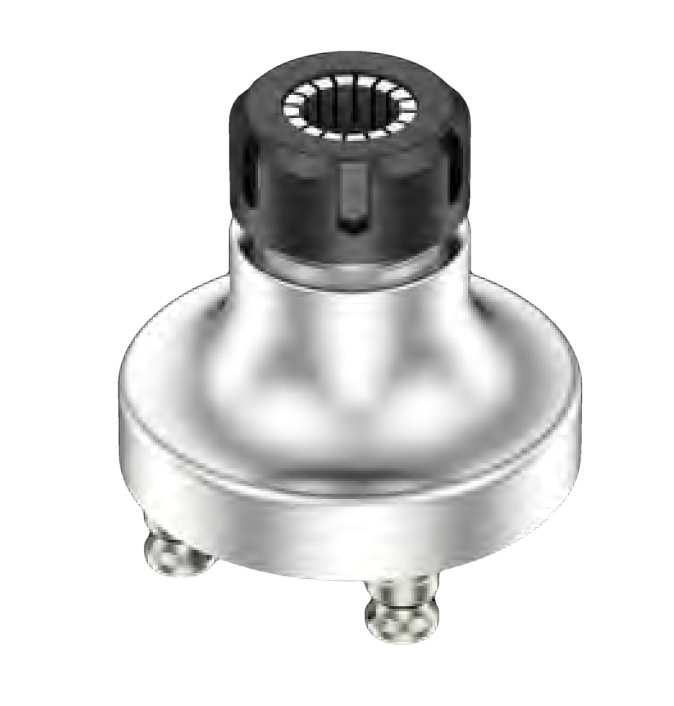
ER collets are slotted and compress. Over time the slots take a set and the collet stops clamping concentrically. Two related mistakes:
- Using a collet outside its range. A collet compressed well below its nominal size loses concentricity; one used above its range barely grips.
- Mixing brands and grades. A cheap collet in a good chuck gives cheap results. Runout is a stack-up, and the collet is the cheapest place to lose it.
Check: try a new collet of known quality with the same tool. If runout drops, the collet was the problem.
2. Nut torque is wrong, or uneven
Under-torque leaves the collet not fully seated. Over-torque distorts it. Both show up as runout, and over-torque also damages the nut thread over time.
Check: use the holder maker's specified torque with a proper torque wrench, and tightenin a consistent motion rather than by feel.
3. Contamination on the taper or in the slots
A chip or dried coolant film between collet and chuck bore tilts the collet. This is the most common cause in shops that use air blast rather than flood coolant.
Check: clean the chuck bore, the collet slots and the nut thread; re-measure. If runout improves and then drifts again within a shift, the cleaning routine is the real problem.
4. The chuck bore or nut is damaged
A crash, a spun tool or a cross-threaded nut deforms the bore. Inspect for fretting marks, a polished band where the collet should grip, or a nut that threads on roughly.
Check: a new collet in a damaged chuck will still show runout. If runout follows the chuck regardless of collet, the chuck is done.
5. The tool shank itself
Ground shanks vary. A shank with taper, out-of-roundness or a burr will never run true, no matter which holder you use.
Check: indicate the bare shank in a V-block or in a known-good holder. If the shank is out, no holder will fix it.
A quick diagnostic sequence
| Step | Action | If runout improves |
|---|---|---|
| 1 | Clean bore, collet and nut | Contamination was the cause — fix the cleaning routine |
| 2 | Fit a new premium collet | Collet wear or grade was the cause |
| 3 | Torque to spec | Torque discipline was the cause |
| 4 | Try a different chuck body | The chuck bore or nut is damaged |
| 5 | Indicate the bare tool shank | The tool is out of tolerance |
What we stock
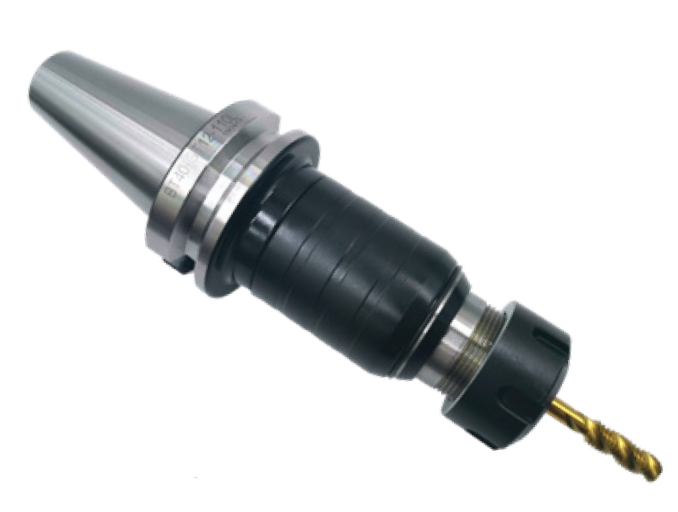
- Reference holder: ER32-52 Collet Chuck
- Full range: shop
The one-line rule
Runout is a stack-up: tool, collet, nut, bore. Change one variable at a time, starting with the cheapest — cleanliness, then the collet.
MOQ 1 piece, in-stock items ship in 3-7 days, made-to-order 15-60 days.